EV range in winter usually drops because cold batteries are less efficient and the vehicle must use energy to heat the battery, cabin and other systems. A noticeable seasonal decline can be normal, but tire pressure, charging behaviour, battery temperature and vehicle condition can make the difference between a manageable change and a frustrating winter commute.
For Oakville EV owners, the best preparation starts before the first deep freeze. Understanding what cold weather changes, and what it does not, helps you plan charging, protect range and recognize when a vehicle should be inspected.
Why EV Range Drops in Winter
Cold weather affects both the amount of usable energy available from a lithium-ion battery and how much energy the vehicle needs to keep occupants and components warm. In a gasoline vehicle, cabin heat can often use waste heat from the engine. An EV has no hot combustion engine to rely on, so energy from the high-voltage battery may be used for cabin heating, window defrosting and battery thermal management. Cold air is also denser, winter roads can increase rolling resistance, and snow or slush adds another efficiency penalty.
Natural Resources Canada notes that cold temperatures reduce EV driving range and that preheating while the vehicle is plugged in can reduce the amount of battery energy used after departure. The important point is that winter range loss is not automatically a sign that the traction battery is failing.
How Much EV Range Can Drop in Canadian Cold
There is no single percentage that applies to every EV.
CAA’s Canadian winter test drove a group of popular EVs from Ottawa to Mont Tremblant in temperatures between about -7°C and -15°C. The tested vehicles travelled 14% to 39% less than their official range figures, with substantial differences between models.
Those results are useful because they show why your own winter experience may not match a neighbour’s, even if you leave home at the same temperature. Battery chemistry, thermal-management design, heat-pump use, vehicle size, tires, speed and driving conditions all influence consumption. Natural Resources Canada has separately reported that cold temperature is one of the most common EV questions it receives from Canadian drivers.
Preconditioning Can Preserve More Range for the Drive
Preconditioning means warming the cabin, and on many EVs the battery, before departure. It is most useful when the vehicle is still connected to external power. Instead of using stored battery energy to bring a very cold vehicle up to temperature after you leave, the car can draw at least part of that energy from the charger. Many EVs allow a departure time to be scheduled through the vehicle or app.
Natural Resources Canada recommends preheating an EV while it is plugged in and notes that programmable pre-timed heating systems can prepare the vehicle before departure. For best results, use the manufacturer’s recommended preconditioning process. Some models heat the traction battery automatically, while others use different strategies depending on whether the destination is a DC fast charger.
If your EV offers scheduled departure charging, combining charging and preconditioning can help you start the trip with a warm cabin and a battery prepared for driving.
Cold Weather Can Also Slow EV Charging
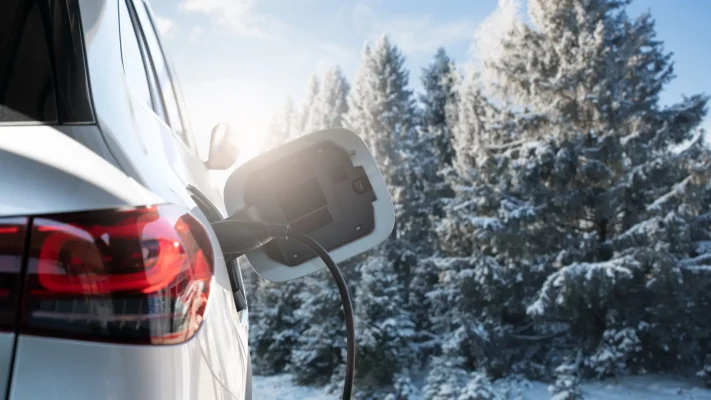
A cold high-voltage battery may not accept energy as quickly as a warm one, especially during DC fast charging. The vehicle’s battery-management system can limit charging power until the battery reaches an appropriate temperature.
Natural Resources Canada’s fleet guidance notes that charge times can be longer when a cold battery has not been preconditioned because the battery must warm before higher charging speeds become available.
This is why a charger capable of a high peak output does not guarantee that your vehicle will immediately charge at that rate. Battery temperature, state of charge, charger capability and the vehicle’s own charging curve all matter.
If your vehicle supports battery preconditioning for fast charging, follow the owner’s manual or navigation guidance. Some EVs automatically warm the battery when a compatible fast charger is entered as the destination.
Winter Tires Still Matter on an EV
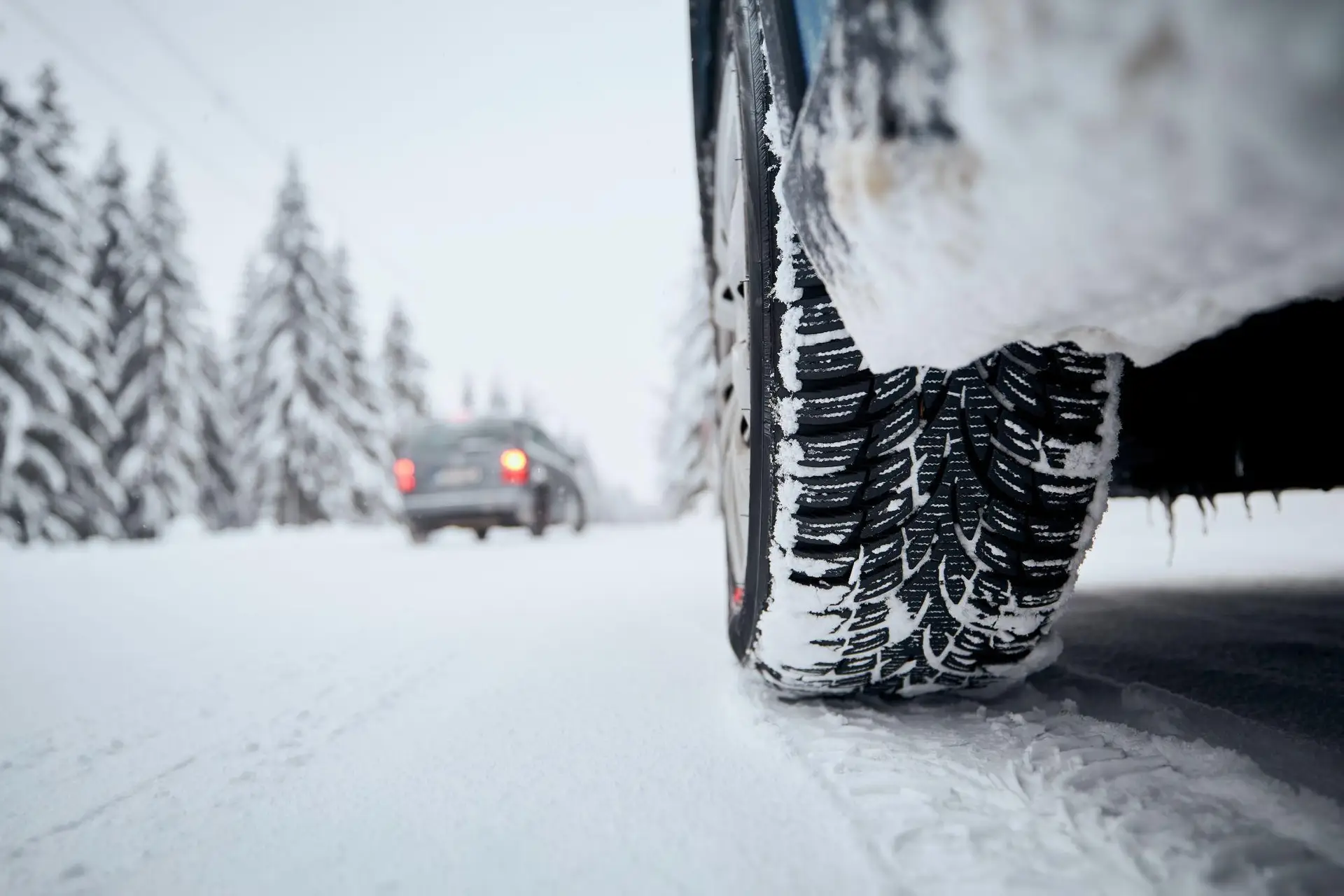
Electric vehicles need the same basic winter traction as any other vehicle. Instant torque and all-wheel drive do not change the amount of grip available when the tires are braking or cornering on cold pavement, snow or ice. A dedicated set of winter tires in Oakville can be a sensible choice for drivers who commute regardless of weather, travel frequently on the QEW or Highway 403, or take longer winter trips.
EV tire wear also deserves attention. Vehicle mass, instant torque, alignment, tire pressure and driving style can all affect how quickly tread wears. Check tread depth before winter instead of assuming last season’s tires still have enough useful life.
Tire Pressure Has a Direct Effect on Winter Efficiency
Tire pressure drops as ambient temperature falls. Underinflated tires increase rolling resistance, which means the vehicle needs more energy to travel the same distance. Natural Resources Canada recommends checking tire pressure at least monthly and more often when temperatures change significantly. Always use the pressure specified by the vehicle manufacturer, normally found on the driver’s door-jamb placard or in the owner’s manual.
Do not inflate tires to the maximum pressure printed on the tire sidewall. That figure is not the vehicle’s recommended operating pressure. When you book a seasonal tire change, ask for tread condition and pressure to be checked at the same time.
Your EV Has More Than One Battery to Think About
Most battery-electric vehicles have a large high-voltage traction battery and a separate low-voltage battery, commonly a 12-volt system.
The traction battery moves the vehicle. The low-voltage battery powers or activates many control systems, computers, locks, contactors and accessories. If that smaller battery is weak, an EV can sometimes appear unable to start or “wake up” even when the high-voltage battery shows plenty of charge. AAA’s 2026 winter battery guidance specifically notes that EVs also use 12-volt batteries that can be affected by cold weather.
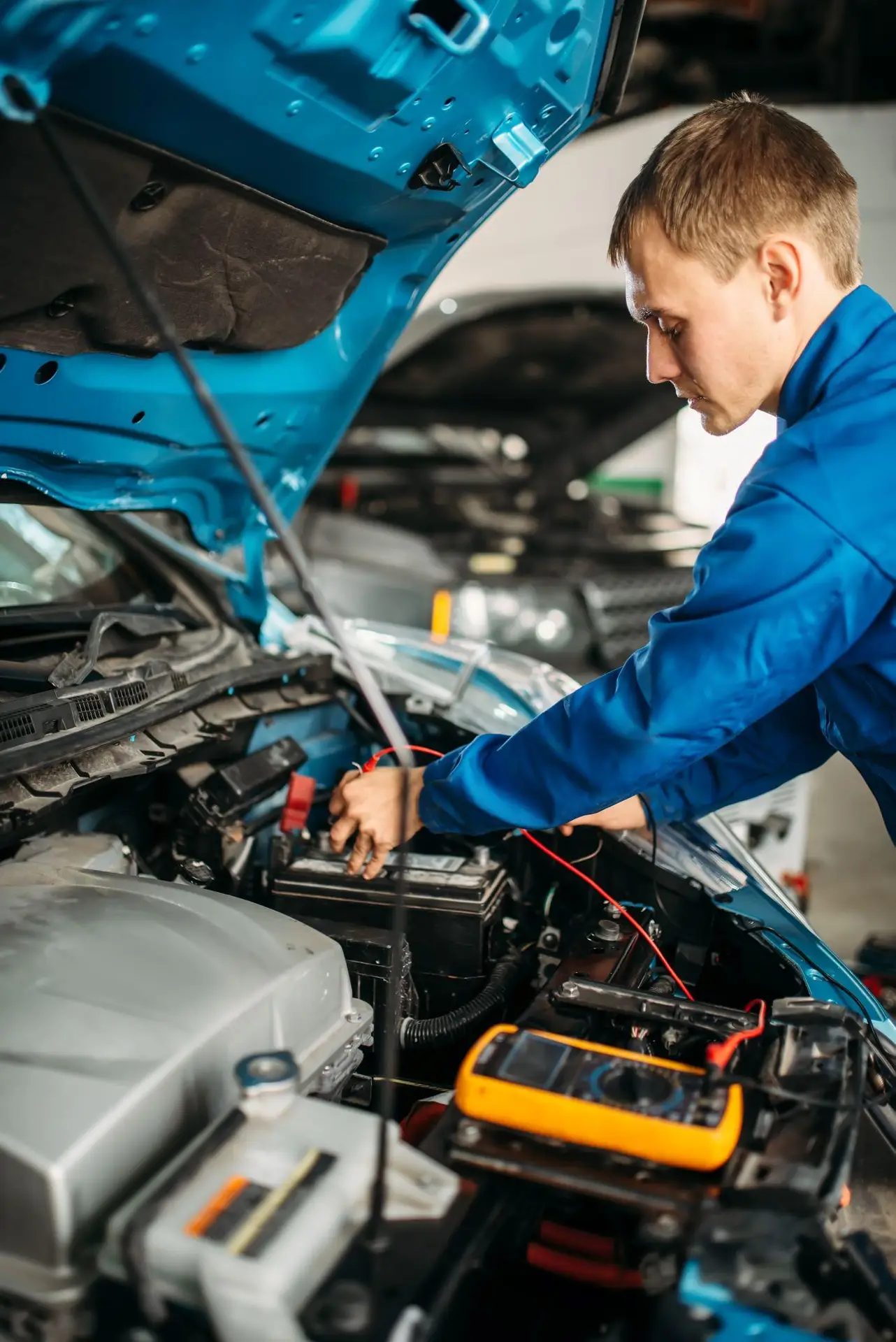
The exact testing and replacement procedure varies by model, so it should be handled according to the manufacturer’s specifications. A winter inspection should distinguish between a normal reduction in traction-battery range and a low-voltage electrical problem rather than treating every battery complaint as the same issue.
What to Check Before Winter
An EV has fewer routine engine-related services than a gasoline vehicle, but it is not maintenance-free. Sil’s existing EV service in Oakville covers maintenance areas such as tires, brakes, cabin filters and battery-system checks, with the correct schedule depending on the make and model.
Before colder weather arrives, useful checks include:
- tire tread depth, wear pattern and pressure
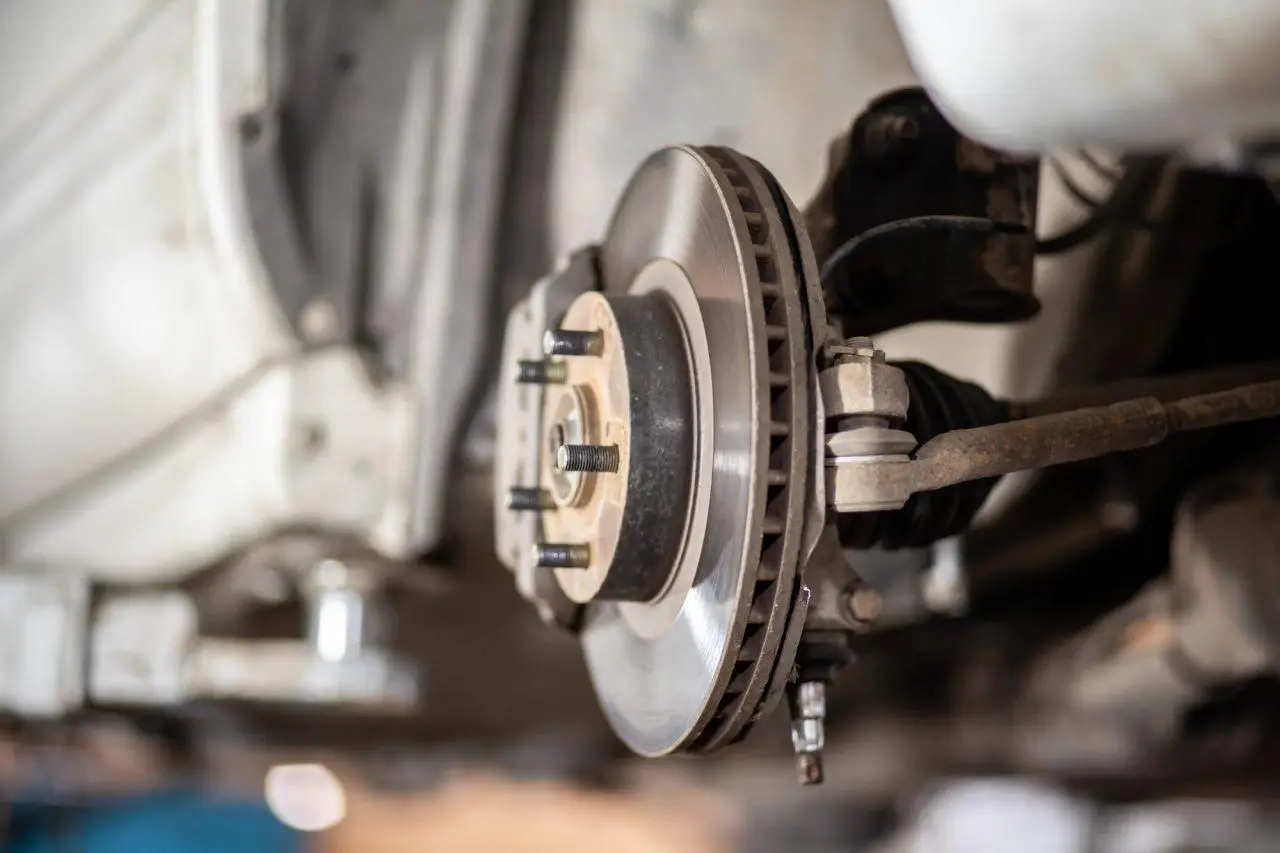
- brake condition, including components that may see less friction-brake use because of regenerative braking
- the low-voltage battery and related electrical system when symptoms or service intervals justify testing
- windshield wipers and winter-grade washer fluid
- cabin air filter condition
- charging cable and charge-port condition
- manufacturer-specified thermal-management or coolant service
- warning lights, diagnostic messages or charging faults
Do not replace fluids or perform battery services based on a generic EV checklist. Requirements vary widely by manufacturer, model and battery thermal-management design.
When Winter Range Loss Is Worth Investigating
A predictable seasonal reduction in range is normal. A sudden or unusually large change compared with the same vehicle in similar conditions deserves a closer look.
Book an inspection if the vehicle develops warning lights, repeatedly fails to charge as expected, shows an unexplained drop in estimated range, has unusual tire wear, struggles with low-voltage electrical functions or behaves differently from its normal cold-weather pattern.
If something still does not make sense after temperature, driving conditions and tire pressure are considered, a qualified EV service facility can use vehicle-specific diagnostics to separate a normal winter efficiency change from a service issue.
Plan Winter Trips Around Conditions, Not Summer Range
Winter trip planning works best when you use your vehicle’s current consumption rather than its best summer estimate. For regular Oakville driving, preconditioning, correct tire pressure and realistic range expectations often make winter EV ownership straightforward. For longer highway trips, the same habits become even more valuable.
If you want your EV checked before winter, Sil’s Auto Care Centre can inspect the vehicle’s service items, tires and relevant systems based on the manufacturer’s requirements and your driving pattern.
Frequently Asked Questions
Does cold weather permanently damage an EV battery?
Normal winter driving does not mean the battery is being permanently damaged simply because the displayed range falls. Modern EVs use battery-management and thermal-management systems, but owners should still follow the manufacturer’s charging and temperature guidance.
Should I charge my EV to 100% in winter?
There is no universal winter charging percentage for every EV. Follow the manufacturer’s daily charging recommendation, and use a higher charge level when needed for a longer trip if the vehicle maker permits it.
Why does my EV charge more slowly when it is cold?
A cold battery may accept power more slowly because the battery-management system limits charging until the pack reaches a suitable temperature. Preconditioning the battery before a DC fast-charging stop can improve charging performance on vehicles that support that feature.
Do electric vehicles need winter tires?
EVs benefit from proper winter tires for the same reason other vehicles do: braking and cornering depend on available tire grip. AWD and traction-control systems cannot replace the traction provided by an appropriate tire.
Should I precondition my EV every winter morning?
Preconditioning is especially useful on cold days when the vehicle is plugged in because it can warm the cabin and, on many models, prepare the battery before departure. Use the scheduling and preconditioning functions recommended for your specific vehicle.