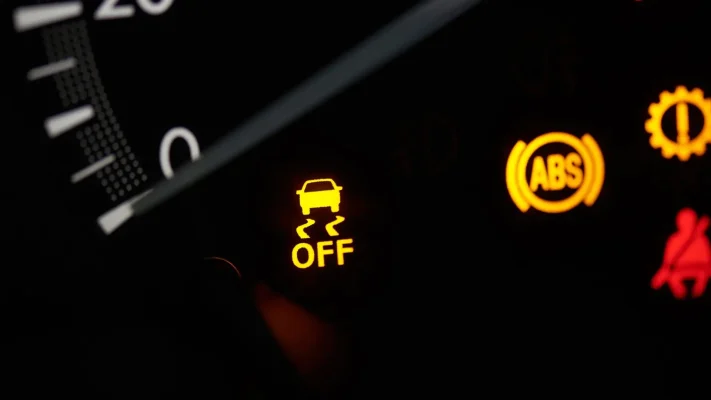
November brings wet roads, colder mornings, and preparations for winter commuting around Oakville and Clarkson. Before dismissing a dashboard warning as a seasonal quirk, check what the symbol means in your owner’s manual and note when it appears.
Why ABS and Traction Control Lights Come On Together
ABS, traction control, and electronic stability control can share information and components. A problem affecting that shared information may switch on more than one warning. The anti-lock braking system, or ABS, adjusts brake pressure when a wheel is about to lock during braking. Traction control helps manage wheelspin during acceleration. Electronic stability control compares the driver’s intended direction with the vehicle’s movement and can intervene to help correct a developing skid.
Wheel-speed sensors tell control modules how quickly individual wheels are rotating. Bosch identifies these sensors as components used by both ABS and electronic stability systems. If a module cannot trust a required signal, it may disable affected assistance functions and illuminate their warnings. Two lights therefore do not necessarily mean two separate parts have failed. They also do not identify which component needs replacing.
A Flashing Traction Indicator Versus a Persistent Warning
A flashing traction or stability indicator can signal active intervention, while a persistent warning can indicate a fault or a deliberately disabled function. The exact meaning depends on the symbol and vehicle.
| What You Notice | What It May Mean | What to Do |
| Warning lamps illuminate briefly at startup, then go out | A normal system check | Confirm the behaviour matches your manual |
| Traction indicator flashes briefly during wheelspin | The system may be intervening | Reduce acceleration and adjust to conditions |
| A traction or stability “off” indicator remains illuminated | A function may have been switched off | Check the controls and manual |
| ABS and traction warnings remain illuminated | A fault may have disabled assistance functions | Arrange diagnostic testing promptly |
| A red brake warning remains on after releasing the parking brake, or braking changes | A potentially serious braking problem | Stop safely and arrange assistance |
Slippery conditions can explain intervention. They do not establish why a warning stays illuminated after normal traction returns.
Possible Causes Behind the Warnings
The cause may involve a sensor, its wiring, the part it reads, or a wider electrical or control-system fault. A sensor code needs circuit and signal checks before a replacement is justified.
Wheel-Speed Sensor and Wiring Problems
A failed sensor, damaged connector, or broken wire can interrupt wheel-speed information. Wiring near the wheel moves with steering and suspension travel, so its condition matters as much as the sensor itself. Replacing a sensor without checking its circuit can leave the original problem unresolved. Even a code naming one wheel is a starting point for testing rather than proof that its sensor has failed.
Encoder Rings and Wheel-Bearing Components
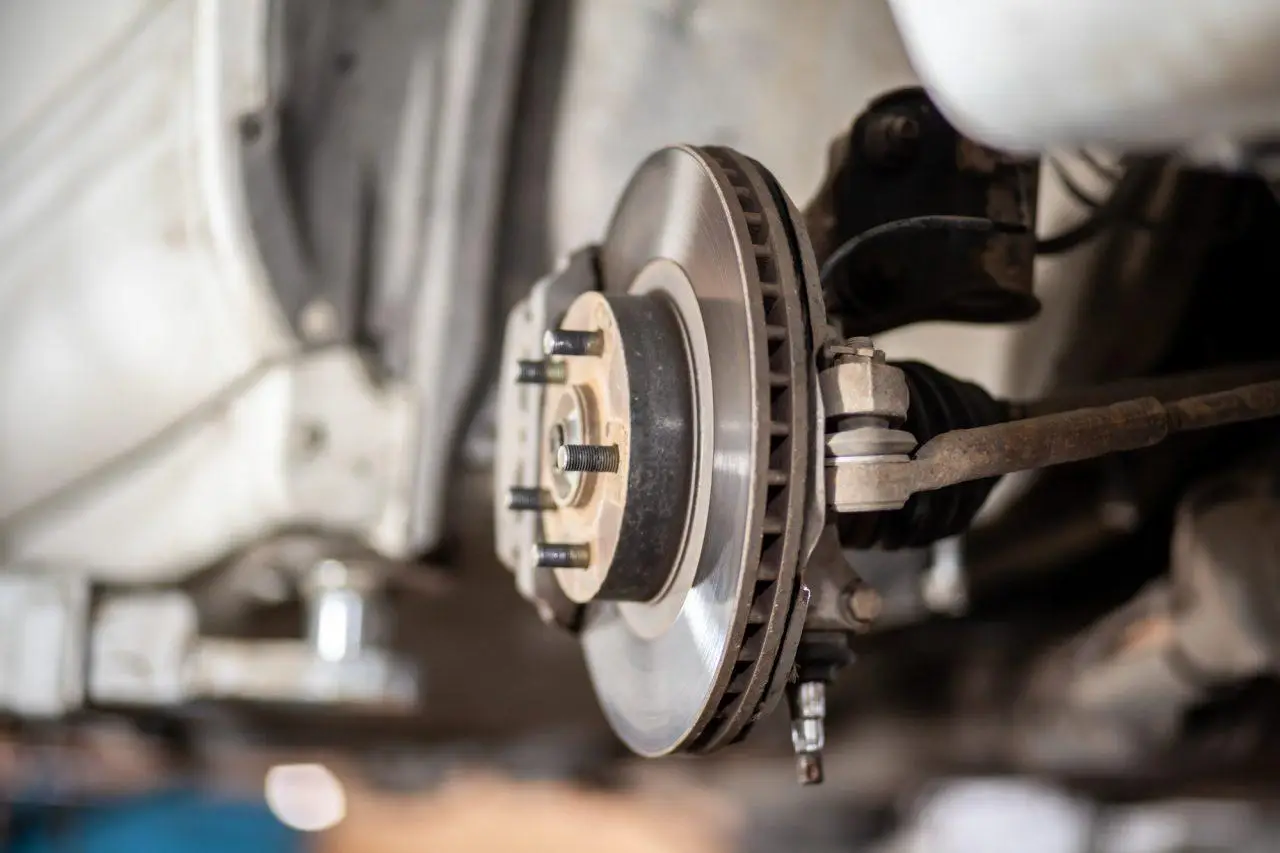
Depending on the vehicle, the sensor reads a toothed ring or magnetic encoder that may be integrated into a wheel bearing. Damage or an incorrect installation can affect the signal even when the sensor is functional. Recent wheel-bearing, axle, or brake work is therefore useful background information. It does not prove that the repair caused the warning.
Electrical Supply and Other System Faults
Low voltage, poor connections, power or ground faults, and communication problems can also affect electronic braking systems. Other possibilities include steering-angle information, calibration requirements, or the ABS control unit itself. If the vehicle already has starting or voltage problems, report them when booking ABS diagnostics. However, a cold morning alone is not evidence that the battery caused these particular warnings.
Is It Safe to Drive With These Lights On?
An amber ABS warning does not automatically mean all braking has been lost, but you should not assume the vehicle has its normal braking assistance. Some manufacturer manuals explain that conventional braking remains available with an ABS fault unless another brake-system warning is also present.
That distinction does not amount to clearance for a highway journey. The underlying fault, other warnings, road conditions, and pedal behaviour all affect the next step.
Stop safely and arrange assistance if the pedal becomes unusually soft, sinks, requires much more effort, or the vehicle does not slow normally. Treat a persistent red brake warning seriously and follow the owner’s manual. Do not continue driving to see whether the symptoms improve.
If only amber warnings are present and braking feels unchanged, contact a repair facility for vehicle-specific guidance. Avoid making your first investigation an unnecessary trip onto the QEW in poor weather.
What You Can Record Before an Appointment
Record the warning pattern and circumstances without trying to reproduce a dangerous event. Those details can help a technician investigate an intermittent fault.
Once parked safely, photograph the dashboard and write down:
- Which lights or messages appeared, including their colours.
- Whether the warnings began at startup or after moving.
- Any recent battery, tire, wheel-bearing, or brake work.
- Whether the problem followed a pothole impact or appeared during a turn.
- Any change in braking, steering, noise, or vibration.
Mention whether the lights disappeared after restarting. Avoid disconnecting the battery or clearing codes before the appointment, since stored information may help explain what happened.
Sil’s warning-light diagnostic services provide a relevant starting point when the cause is unclear.
How a Technician Diagnoses the Problem
A useful diagnosis combines fault codes with physical inspection and live system information. A code scan alone does not confirm which repair will solve the problem.
Depending on the vehicle and symptoms, testing may include accessing the ABS module, comparing wheel-speed data, inspecting wiring and connectors, and checking power supplies. The technician may also examine a wheel bearing or encoder and follow manufacturer test procedures.
For an intermittent issue, the conditions under which a signal drops out can matter. A controlled test may show a wheel reporting an implausible speed even though the warning was absent when the vehicle arrived.
After an identified fault is repaired, verification should check that the relevant signals and warning behaviour return to normal. Sil’s vehicle diagnostic testing supports investigating the cause before choosing parts.
Address Persistent Warnings Before Winter Driving
A persistent warning deserves attention before snow and ice make braking demands less forgiving. If your winter tire appointment is weeks away, ask whether the warning needs an earlier diagnostic visit.
When a warning accompanies mechanical symptoms, a professional brake inspection can help assess the braking system alongside electronic diagnostics. Describe both concerns when booking so the appointment addresses the whole problem.
Sil’s Auto Care Centre serves drivers from its Winston Churchill Boulevard location near the Oakville–Mississauga border. Contact the team with the warning details and any braking changes so they can advise you on arranging an assessment.
Frequently Asked Questions
Can a basic engine-code reader diagnose an ABS warning?
A basic reader may not access the ABS control module. Check the tool’s coverage for your exact vehicle, since reading engine emissions codes does not establish access to brake-system faults.
Should I replace all the wheel-speed sensors at once?
An ABS warning does not establish a need to replace every wheel-speed sensor. Testing should identify the affected circuit or component before parts are recommended.
Will installing winter tires fix an ABS fault?
Winter tires do not repair a failed ABS sensor or electrical circuit. Tire fitment still needs to meet the vehicle manufacturer’s requirements, so report any warning that began after a wheel or tire change.
How much will the repair cost?
The repair cost depends on the confirmed cause, vehicle, and access required. Ask for the diagnostic charge and an estimate for the identified repair instead of comparing prices for a sensor that may not be faulty.