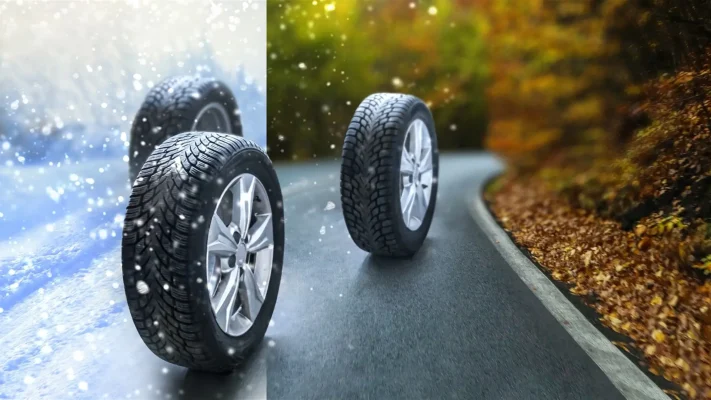
When comparing all-weather vs. winter tires, both can be valid choices for Ontario drivers, but they are built for different priorities. All-weather tires trade some peak winter capability for year-round convenience, while dedicated winter tires are designed to deliver their strongest performance in sustained cold, snow, slush and ice.
For Oakville drivers, the better choice depends less on the name on the sidewall and more on how, when and where you drive. Your daily commute, winter highway use, parking situation, annual mileage and willingness to store a second set of tires all matter.
All-Weather vs. Winter Tires: The Basic Difference
All-weather tires are designed to stay on the vehicle through all four seasons. Quality all-weather models typically carry the Three-Peak Mountain Snowflake symbol, often shortened to 3PMSF, which means the tire has met a defined snow-traction performance requirement.
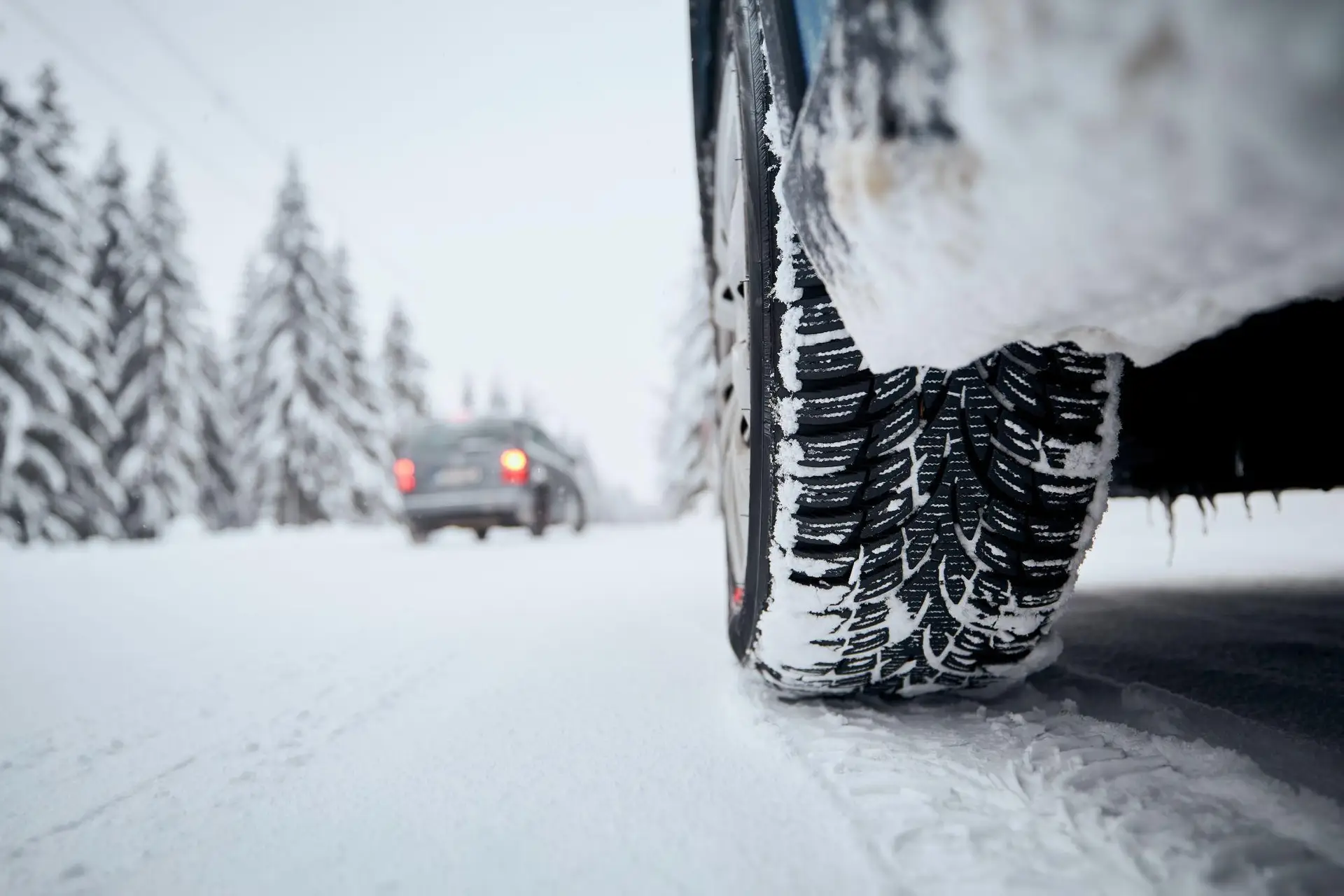
Dedicated winter tires are also identified by the Three-Peak Mountain Snowflake symbol, but their tread patterns and rubber compounds are optimized specifically for cold-weather use. Transport Canada notes that all-season and summer tires begin losing elasticity below about 7°C, while winter tires are designed to remain flexible at much lower temperatures.
That distinction matters because winter driving is not only about deep snow. Cold dry pavement, packed snow, slush, freezing rain and changing road temperatures can all affect grip.
What the Three-Peak Mountain Snowflake Symbol Really Tells You
The Three-Peak Mountain Snowflake symbol is the first marking to look for when comparing tires intended for winter conditions. It confirms that the tire meets specific snow-traction requirements. Transport Canada identifies the mountain-and-snowflake mark as the indicator that a tire meets defined severe-snow performance requirements.
It does not mean every tire carrying the symbol performs identically in every winter condition. An all-weather tire and a dedicated winter tire can both carry the symbol while using different compounds, tread designs and performance priorities.
That is why the symbol should be treated as a qualification standard, not a complete buying guide. A driver who stays mostly on cleared urban roads may have different needs from someone who routinely drives before roads are cleared, travels long distances in winter or heads north on weekends.
If you are considering a single year-round set, Sil’s all-weather tire options in Oakville can be matched to your vehicle, annual mileage and driving pattern.
When All-Weather Tires Make Sense
All-weather tires can make sense when convenience is a major priority and your winter driving is mostly predictable. Current CAA guidance describes all-weather tires as a year-round option with winter traction, while distinguishing them from conventional all-season tires.
They are often worth considering if you:
- drive mainly within Oakville and nearby communities
- can postpone or avoid driving during the worst winter storms
- do not want to store a second set of tires
- prefer to avoid seasonal tire swaps
- drive moderate annual mileage
- want one tire set that can handle summer rain, shoulder-season cold and winter conditions
The practical advantage is that one set eliminates two seasonal changeovers and the need to store a second set of wheels and tires. Year-round use does not remove routine tire maintenance. Because the same tires stay on the vehicle in every season, tread depth, tire pressure, rotation and alignment matter. A year-round tire that has worn heavily through summer may enter winter with less useful tread than expected.
When Dedicated Winter Tires Make More Sense
Dedicated winter tires make more sense when winter traction is the priority rather than convenience. They are a stronger fit for drivers who regularly commute early in the morning, use highways during winter, travel outside the GTA, visit cottage country or ski areas, or cannot simply stay home when freezing rain or heavy snow arrives.
For an Oakville driver using the QEW or Highway 403 several days a week, the decision is not just about whether local residential streets are plowed. Highway speeds, spray, slush, changing temperatures and sudden weather shifts increase the value of having tires designed specifically for winter use.
Dedicated winter tires also let you preserve your warm-weather tires through the coldest months. When the seasons change, Sil’s winter tire service in Oakville can help confirm that the tires are appropriate for the vehicle and still have suitable tread and condition for another season.
Does AWD Mean You Can Skip Winter Tires?
All-wheel drive can help a vehicle accelerate from a stop, but it does not create extra tire grip when braking or turning. CAA has highlighted this distinction because AWD and four-wheel drive help propel a vehicle, but they do not provide the same benefit when a driver needs to stop or change direction on a slippery surface.
The same principle applies to traction-control and stability-control systems. These technologies can help manage the grip that is available, but they cannot create traction that the tire does not have. If your vehicle has AWD, choose tires based on the conditions you expect to drive in rather than assuming the drivetrain replaces winter traction.
What About Ontario’s Winter Tire Insurance Discount?
Ontario insurers are required to offer a winter-tire discount, but the eligibility rules and discount amounts are set by each insurer. The Financial Services Regulatory Authority of Ontario advises drivers to ask their insurer how to qualify because individual companies apply discounts differently.
That means drivers should not assume that every tire carrying a winter-related symbol automatically qualifies under their policy. Before buying an all-weather set partly for insurance savings, ask your insurer exactly what tire type, installation period and documentation they require.
If a dedicated winter setup is required for your discount, factor that savings into the comparison. The total ownership decision is not only the purchase price of the tires. It can also include seasonal installation, wheel costs, storage, expected tread life and insurance savings.
Think About Your Real Winter Driving, Not the Average Winter
A useful tire recommendation starts with your actual driving pattern. Consider three Oakville drivers. One works from home, drives mostly during the day and can avoid travel during storms. Another commutes daily on the QEW before 7 a.m. A third drives to Collingwood or cottage country throughout the winter.
Those three vehicles may sit in the same driveway, yet the best tire choice may be different for each one.
Ask yourself:
- How many kilometres do I drive each winter?
- How often do I use 400-series highways?
- Can I delay a trip if the weather is poor?
- Do I regularly drive north of the GTA?
- Where would I store a second tire set?
- How many seasons do I expect to keep the vehicle?
A tire professional can also check the vehicle’s required size, load rating and speed rating before recommending specific options. Those details matter, especially on SUVs, EVs and vehicles with larger wheel packages.
If You Choose Winter Tires, Plan the Change Before the Rush
Do not wait for the first snowfall to start thinking about installation. CAA and Transport Canada use roughly 7°C as an important cold-weather threshold because conventional all-season and summer compounds begin to lose flexibility as temperatures fall.
Booking your seasonal tire change before sustained cold arrives gives you more flexibility and makes it easier to inspect the tires before they are needed. The service should include more than simply bolting on four wheels. Tire condition, tread depth, pressure and visible damage should also be checked.
If storing a second set is the main reason you are leaning toward all-weather tires, professional tire storage in Oakville can remove that obstacle. Proper storage also keeps off-season tires away from sunlight, moisture and other conditions that can affect rubber over time.
Which Tire Setup Is Right for You?
All-weather tires are a practical choice for drivers who value year-round convenience and can limit driving during severe winter conditions. Dedicated winter tires are the better fit when cold-weather traction is the priority, particularly for frequent highway driving, long winter trips and schedules that do not change when the forecast does.
There is no useful one-size-fits-all answer. The right setup is the one that matches your vehicle, your mileage and the conditions you actually drive through.
If your current tires are close to replacement age or you are unsure how much tread is left for another winter, have them inspected before temperatures fall. Sil’s Auto Care Centre can review the condition of your existing tires and help you compare all-weather and winter options based on how you use your vehicle.
Frequently Asked Questions
Are all-weather tires the same as winter tires?
No. Both can carry the Three-Peak Mountain Snowflake symbol, but all-weather tires are designed for year-round use while dedicated winter tires are optimized specifically for cold, snow, slush and ice.
Can I use all-weather tires year-round in Ontario?
Yes, all-weather tires are designed for year-round use, provided the specific tire is appropriate for your vehicle and remains in safe condition. You still need to monitor tread depth, pressure, rotation and alignment because the same set is accumulating kilometres in every season.
Do all-weather tires qualify for Ontario’s winter tire insurance discount?
It depends on the insurer. Ontario insurers must offer a winter-tire discount, but each company sets its own eligibility requirements, so confirm the rules before assuming an all-weather tire will qualify.
Do I need winter tires if my vehicle has AWD?
AWD does not replace winter tires. It can improve acceleration, but braking and cornering still depend on the amount of grip available at the tires.
When should I put winter tires on in Oakville?
Plan the change when temperatures are consistently approaching or falling below about 7°C rather than waiting for the first major snowfall. Booking early also gives you time to inspect tread depth, pressure and tire condition before winter weather arrives.